

Research update:
Presenting survivor leadership research at the
Critical Perspectives on Accounting Conference 2026
Giving Account: Learning from Modern Slavery Survivor Leadership
In July 2026, Professor Finia Kuhlmann (HEC Paris) presented research from the Modern Slavery Community of Practice (MSCOP) and HEC Paris partnership at the Critical Perspectives on Accounting (CPA) Conference in Rio de Janeiro, Brazil. Held every three years, the CPA Conference brings together researchers from around the world who are interested in how accounting and accountability can contribute to a more just and equitable society. Rather than focusing solely on financial reporting, the conference explores how accountability shapes issues such as inequality, human rights, public policy, and social change – making it an important forum for research on modern slavery and survivor leadership.
The paper, Giving Counter Accounts: Learnings from Modern Slavery Survivor Leadership, asks a simple but important question: what does it actually take for survivor leaders to give an account of their experiences in ways that influence organisations, policy, and public understanding?
While many organisations now recognise the importance of involving people with lived experience, much less attention has been paid to the work undertaken by survivor leaders themselves. Drawing on two years of collaboration with survivor leaders across the UK, the research shifts the focus away from organisations and towards the practice of account-giving itself.
Finia Kuhlmann,
Assistant Professor,
École des hautes études commerciales de Paris
Principal Investigator of the
Survivor Account Giving Project
One of the paper's key contributions is making visible the often unseen work of survivor leadership. Audiences typically see the final speech, workshop or consultation, but not the careful preparation behind it. The research shows that survivor leaders combine lived experience with professional expertise, thoughtfully adapting their accounts to different audiences and considering how their words will be received. They constantly balance authenticity, credibility, emotional impact, and personal wellbeing, while navigating the risks of being reduced to "just" their story or having their expertise overlooked. By revealing this hidden labour, the paper invites organisations to recognise survivor leaders not simply as storytellers, but as skilled practitioners whose account-giving involves considerable judgement, care, and expertise.
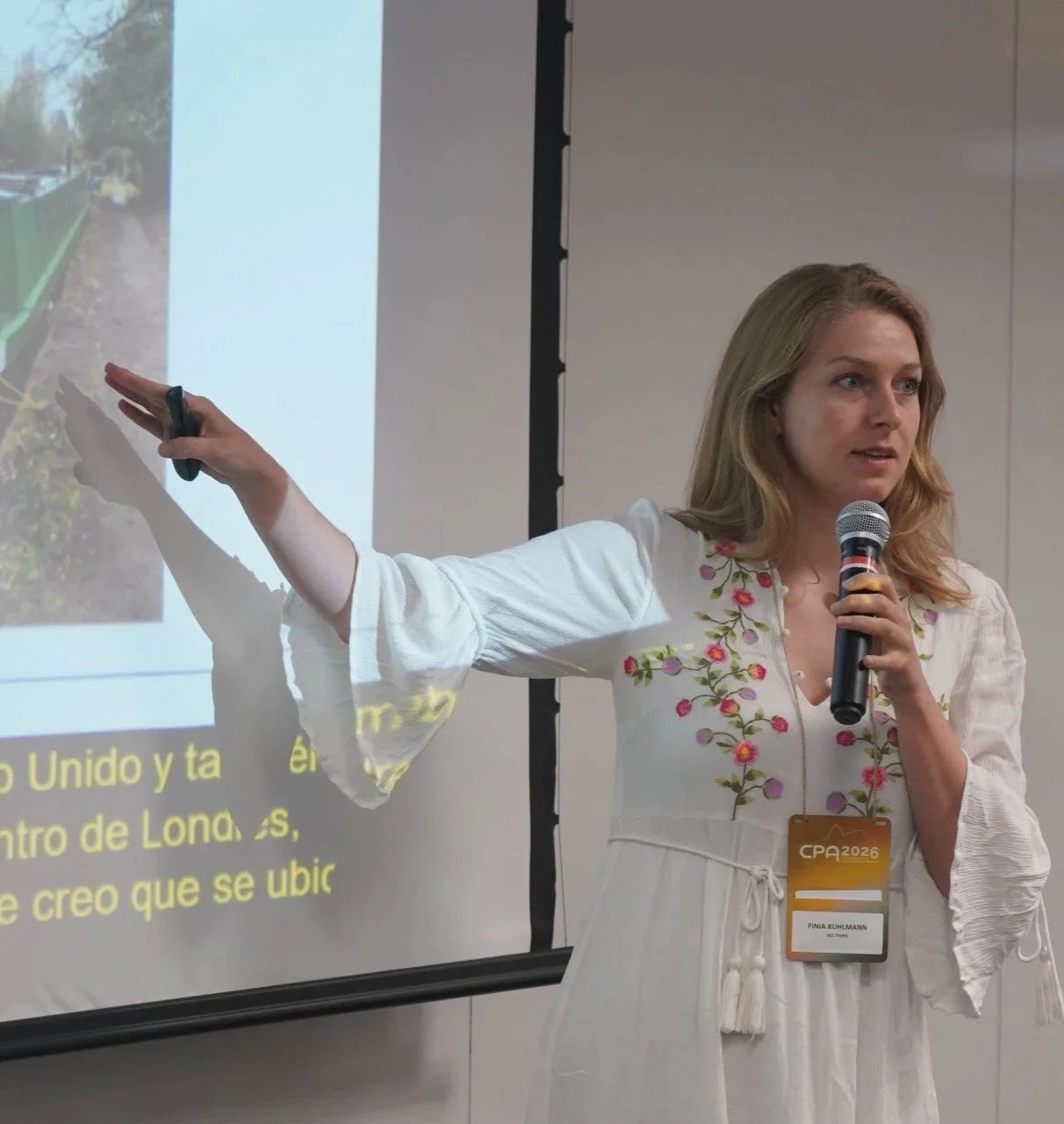
The presentation generated valuable discussions with around 40 international researchers working on accountability, participation, and marginalised voices. Professor Uche (an expert on accounting and social justice) was the allocated discussant and gave feedback on how to better develop an academic argument for the accounting literature. Bringing the experiences and reflections of survivor leaders into these wider academic conversations helps ensure that lessons emerging from the modern slavery sector inform broader debates about participation, accountability, and social justice, while also strengthening the evidence base that can support future practice across the sector. As one professor put it, “what will stay with me after today is how much care survivor leaders have for their audiences”.